Stop Performing, Start Connecting: Why Being Weird Is Your Greatest Social Asset Right Now
For a long time, the unspoken rule of social media — and honestly, social life in general — was pretty simple: show the best version of yourself. Curate. Filter. Edit. Post the vacation photo, not the one where you look tired and sunburned. Share the career win, not the spiral that happened the week before.
But something's shifting. And if you've spent any time on TikTok lately, or stumbled into the right corner of Reddit, you've probably already felt it.
People are exhausted by the performance. And they're starting to opt out.
The Curated Life Isn't Selling Anymore
There's a reason why "authentic" became such an overused buzzword — because for a while, it was genuinely rare. Brands chased it. Influencers faked it. And regular people scrolling through feeds started to feel this low-grade sense of alienation they couldn't quite name.
Psychologists call it "social comparison theory" — the idea that we instinctively measure ourselves against the people around us. When everyone around you appears to be thriving, traveling, glowing, and succeeding simultaneously, the math starts to feel wrong. You start to wonder what's wrong with you.
But Gen Z, and increasingly older millennials, have started to clock the game. They grew up online. They know what a ring light does to someone's skin. They can spot a sponsored "candid" moment from a mile away. And they're not impressed.
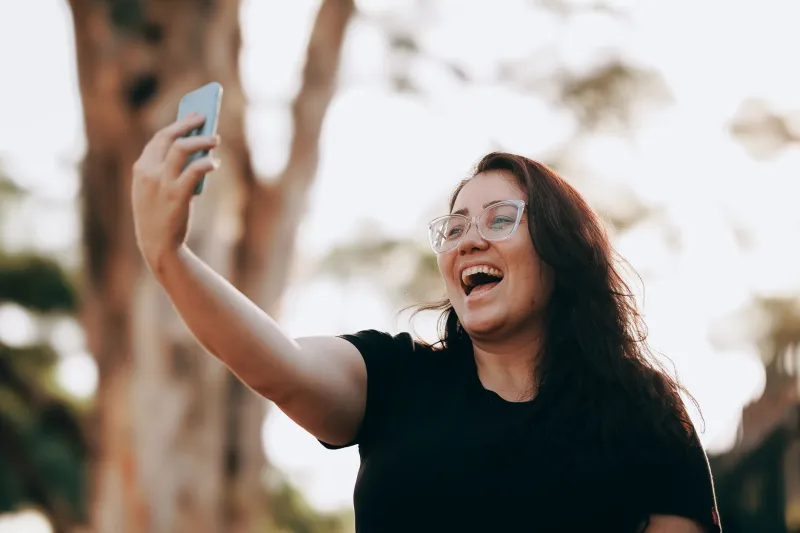
What they are responding to? The weird stuff. The real stuff. The 2 a.m. voice memo about a niche obsession nobody asked about. The selfie taken in bad lighting because the moment was worth capturing anyway. The unfiltered opinion that might not land with everyone but lands hard with the right people.
What 'Vibe Matching' Actually Means
You've probably heard the term "vibe check" thrown around casually — but there's something genuinely interesting happening underneath the slang.
When people talk about vibes, they're often describing something that's hard to articulate but immediately felt. It's the sense that someone is operating on the same frequency as you. That their energy, their humor, their way of seeing the world just... fits. It's less about shared hobbies and more about shared texture.
And here's the thing: that kind of resonance is almost impossible to fake. You can manufacture a shared interest — say you love hiking when you've been once. But you can't really manufacture a vibe. It either clicks or it doesn't.
This is actually backed up by research in interpersonal psychology. Studies on social bonding consistently show that people form stronger, longer-lasting connections when they feel seen rather than simply impressed. Admiration fades. Recognition sticks.
So when someone shows up online — or in person — without the performance armor, it creates an opening. A signal that says: this is actually me. And for the right person, that signal is magnetic.
The Rise of the Micro-Community
One of the most fascinating byproducts of this authenticity shift is what's happening with community formation. We used to think of online communities as interest-based — you join the subreddit for the thing you like, the Facebook group for the hobby you share. Clean, categorical, organized.
But the communities that are actually thriving right now? They're built around something harder to categorize. Shared weirdness. Mutual niche obsessions. A particular flavor of humor that doesn't quite work anywhere else.
Think about the corners of the internet where people bond over extremely specific aesthetics, inside jokes that evolved organically over months, or collective emotional experiences that never would have made it onto a mainstream platform. These aren't communities built around a topic. They're built around a vibe.
And they tend to be remarkably tight-knit. Because when you find your people through something genuinely specific and weird, the signal-to-noise ratio is way better. You're not wading through thousands of surface-level interactions hoping to find depth. The depth is already implied by the fact that you both ended up there.
This is exactly what platforms like Clibme are tapping into — the idea that connection isn't just about proximity or shared demographics. It's about finding the people who are operating on your frequency, wherever they happen to be.
Being Real as a Competitive Advantage
Here's the part that might feel counterintuitive: in a world where everyone is still trying to perform, showing up authentically is actually a power move.
When you're not trying to appeal to everyone, you become exponentially more appealing to the right people. You stop attracting connections that look good on paper but feel hollow in practice. You start attracting the ones that actually sustain you.
This plays out in dating culture in a really visible way. The era of the perfectly crafted dating profile — the one with the professional headshot and the carefully workshopped bio — is giving way to something messier and more honest. People are including their actual weird opinions, their unusual interests, the things that might turn some people off. And the matches they get tend to be more compatible, more engaged, more real.
The same dynamic shows up in friendship. When you stop trying to be likable to everyone and start just being yourself, you lose the casual acquaintances who were never really your people anyway. What you gain is something rarer: friendships where you don't have to code-switch, where you don't have to maintain a version of yourself, where you can just exist.
So What Does This Mean for How You Show Up?
None of this is an argument for oversharing or abandoning all social awareness. There's a difference between being authentic and just being unfiltered for the sake of it. Real authenticity isn't performative rawness — it's just... not hiding.
It means letting the things you actually care about be visible. It means not softening your personality to fit a room that was never really your room. It means trusting that the people who are meant to connect with you will find you more easily if you're not buried under a carefully constructed persona.
In a social landscape that's increasingly saturated, being genuinely yourself isn't just emotionally healthier — it's strategically smarter. Your real self is the one thing nobody else can replicate or outcompete.
So maybe the vibe check isn't something that happens to you. Maybe it's something you actively pass by showing up as exactly who you are — and letting the right people recognize it.