The Malls Are Gone, So We Built Our Own Living Rooms: Inside America's DIY Social Revolution
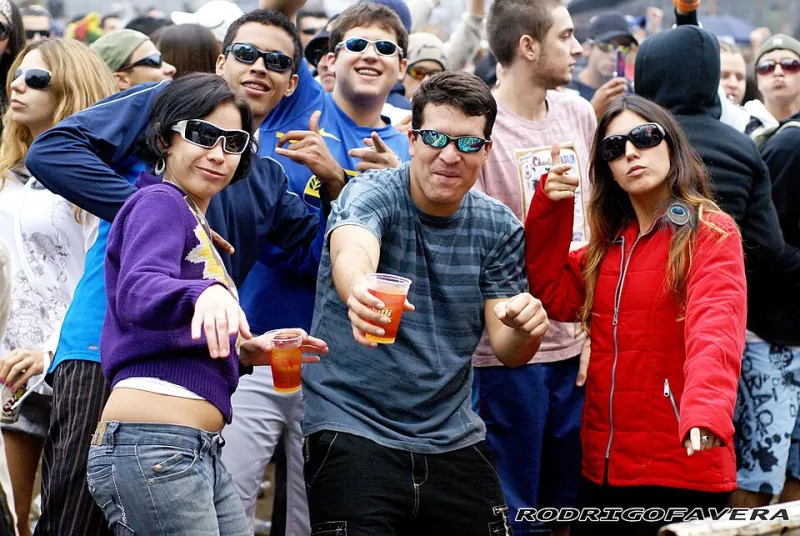
Photo: Rodrigo Della Fávera, CC BY 2.0, via Wikimedia Commons
There's a dead mall in nearly every American metro area — and if you're under 35, you probably grew up inside one of the living ones. The mall was the third place. Not home, not work, but the in-between space where you ran into people, lingered, and belonged without an appointment.
Those spaces are disappearing. Malls have been collapsing for two decades. Church membership has fallen off a cliff — Gallup found it dropped below 50% of Americans for the first time in 2021. Bars are pricey, and a growing share of young adults aren't drinking anyway. The pandemic put the final boot on a lot of it.
But here's the interesting part: Americans didn't just accept the loneliness. They started building.
The Run Club Is the New Town Square
Look at any city on a Saturday morning. Philadelphia, Austin, Denver, Chicago — hundreds of people in matching club singlets doing 5Ks, then hanging out at a coffee shop for an hour afterward. Run clubs exploded post-pandemic, and the mileage is almost beside the point. The run is the excuse; the bagels and gossip afterward are the product.
The formula that makes it work is repeatable: a fixed time, a low skill barrier, and zero sign-up friction. You just show up. Nobody vetted you. Nobody needs to.
Dice, Boards, and Basements
The same logic is powering the tabletop renaissance. Board game cafés — where you pay for a table and get access to a shelf of games — have opened in cities and suburbs alike. Dungeons & Dragons, once the ultimate social punchline, is now a mainstream way adults structure their weeks. A regular D&D night is arguably the most reliable friendship engine in America right now: same people, same time, every week, with a built-in reason to keep talking.
Add in rec sports leagues (kickball, volleyball, bocce — thank you, Volo and the like), trivia nights, community gardens, and repair cafés, and a pattern emerges. People aren't waiting for institutions to provide belonging. They're scheduling it.
Why Some of These Spaces Stick (And Others Don't)
Plenty of these experiments fizzle. The ones that last tend to share a few traits:
- Consistency beats novelty. A weekly event builds a community. A monthly one builds an attendee list.
- A task lowers the pressure. It's easier to talk to a stranger while running, rolling dice, or painting a miniature than across a table with nothing to do.
- Somebody owns it. Every thriving third place has a den mother — the person who books the space, posts the schedule, and remembers your name by week two.
- Food or drink nearby. Non-negotiable. Humans linger where there are snacks.
How to Find (or Start) One in Your Town
Finding one is easier than you think: search Meetup and Facebook for your hobby plus your city, check the bulletin board at your local game shop or running store, or just show up to the run club you saw on TikTok.
Starting one is easier than it sounds. Pick a recurring time. Choose a public, cheap, or free venue — a park, a brewery with slow Tuesdays, a library meeting room. Post it in one local group chat. Show up every time, even when it's just you and one other person. That's how every one of these communities started: somebody decided a place should exist and refused to stop showing up.
The mall isn't coming back. The pew might not either. But the living room — the shared, public kind — is being rebuilt one Saturday morning 5K and one chaotic game of Catan at a time.